
 Written by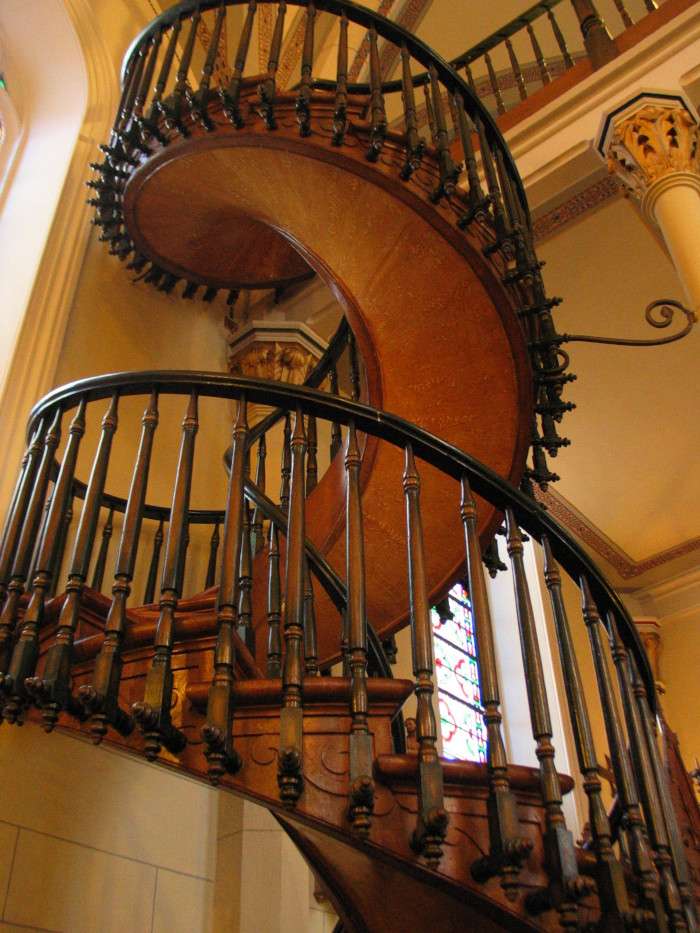
In the quiet city of Santa Fe stands the beautiful and historic Loretto Chapel—a modest Gothic-style structure that holds within it one of the most enduring architectural mysteries in American history. What began as a simple design oversight would soon evolve into a story that blurs the line between faith, folklore, and unexplained ingenuity.
When the chapel was completed in 1878, it was celebrated for its elegance and craftsmanship. But admiration quickly gave way to concern when it was discovered that a crucial element had been overlooked: there was no access to the choir loft, which rose approximately twenty-two feet above the main floor. The space was too confined for a conventional staircase, and local carpenters—experienced and practical—offered a blunt conclusion: it couldn’t be done. The only solution, they insisted, was a ladder.
For the Sisters of Loretto, this was unacceptable. A ladder was neither practical nor dignified for daily use during worship. Faced with a seemingly impossible problem, the Sisters turned not to engineering—but to faith. They began a novena, nine days of devoted prayer, to Saint Joseph, asking for guidance and a solution.
According to legend, on the ninth and final day of prayer, their answer arrived.
A quiet, unassuming man appeared at the chapel, accompanied only by a donkey and a simple set of tools. He asked if there was work to be done. The Sisters, believing their prayers had been answered, welcomed him and explained their dilemma. Without hesitation, the man agreed to take on the task.
He worked alone
For months, the mysterious carpenter labored in near silence, rarely seen and never requesting assistance. There were no elaborate tools, no visible plans, and no clear indication of how he intended to solve a problem that had stumped every other craftsman. Then, one morning, the work was complete.
What stood before the Sisters was nothing short of astonishing.
A graceful, spiraling staircase rose from the chapel floor to the choir loft—elegant, compact, and unlike anything they had imagined possible. It featured two full 360-degree turns, rising roughly 20 feet in just 33 steps. Most astonishing of all, it appeared to have no central support column, no visible means of structural reinforcement, and—at least initially—no railing. Even more curious, it was constructed without the use of nails, relying instead on wooden pegs and intricate joinery.
But the mystery deepened
When the Sisters went to thank the carpenter and offer payment, he was gone. No one had seen him leave. No name had been given. He had simply vanished, leaving behind only the staircase—and a growing sense of wonder.
Over time, the staircase itself became an object of fascination not only for the faithful, but for architects, engineers, and skeptics alike. How could such a structure stand without visible support? How had it been built in such a confined space? And perhaps most puzzling—where had the materials come from?
The wood used in the staircase did not match any species native to the region around Santa Fe. Later analysis suggested it was a type of spruce more commonly found in distant climates, possibly as far away as Alaska or even Europe. In the late 19th century, transporting such materials to the remote Southwest would have been no small feat, adding yet another layer to the mystery.
Decades later, efforts were made to separate legend from fact. In 1984, historian Mary J. Straw Cook published Loretto: The Seven Sisters and Their Santa Fe Chapel, in which she presented evidence that may point to a real craftsman behind the work. Among her findings was a receipt dated 1881, indicating payment to a man named Francois Rochas for wood.
Further research uncovered a local newspaper article reporting that Rochas had been tragically murdered in his home. The same article identified him as the builder of the chapel’s staircase. According to Cook, Rochas may have traveled to the United States specifically for this project, even importing specialized wood from France to complete it.
His final resting place can be found at the Our Lady of the Light Catholic Cemetery—a quiet and unassuming grave that offers few answers to a story filled with questions.
And yet, even with this possible explanation, the mystery endures.
Was the staircase truly the work of a highly skilled—but ultimately human—craftsman whose story became mythologized over time? Or was there something more at play, as the Sisters believed—a divine intervention, delivered through the hands of a stranger who appeared only when he was needed most?
The fascination with the staircase has only grown over the years, inspiring books, investigations, and even the 1998 film The Staircase, which dramatizes the legend and its lingering questions.
In the end, the true power of the Loretto staircase may not lie in how it was built—but in the fact that, even now, no single explanation seems to fully account for its existence.