 Written by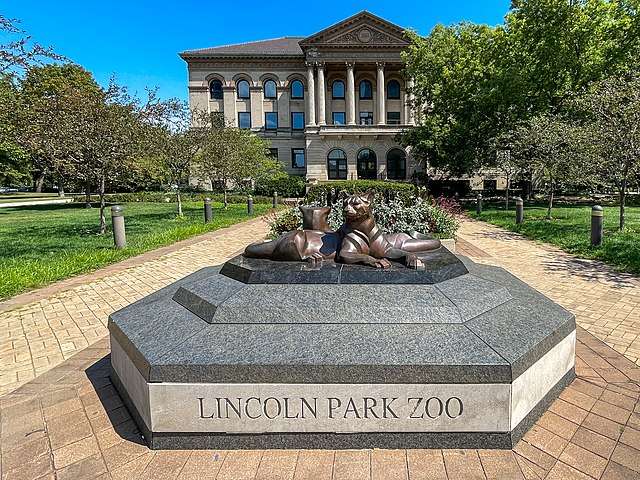
Tucked in the heart of Chicago, the 35-acre Lincoln Park Zoo is often celebrated for its 1,100 animals spanning 200 species and its free admission, a rarity in North America. Visitors wander past lions, flamingos, and snow leopards, enchanted by the sights and sounds of the animal kingdom. Yet beneath the chirping of birds and the hum of families strolling through its paths, the land itself carries a far older, darker story—one that has earned Lincoln Park Zoo the reputation as the most haunted zoo on the continent.
Long before cages and enclosures, this land was the Chicago City Cemetery. At its peak, some 35,000 bodies rested here, buried in neat rows beneath the low-lying ground that slopes toward Lake Michigan. Locals had always felt uneasy about the cemetery’s location. The proximity to the water was thought to contaminate the city’s drinking supply, aiding the spread of illness, disease, and death. The land itself seemed to fester with unease, a place where the boundary between the living and the dead grew thin. In the late 19th century, public health officials, led by Dr. John Rauch, began a campaign to relocate most of the bodies to cemeteries beyond the city limits, hoping to cleanse the area. Official records claimed all remains had been moved, but historians and urban legends tell a far more unsettling story: roughly 12,000 bodies were never accounted for, left behind to linger beneath the soil, hidden beneath what would eventually become the zoo’s grassy paths and animal enclosures. Over the years, bones have been uncovered during construction and landscaping, a macabre reminder that the dead never fully left.
Among the cemetery’s many secrets, few are as famous—or as eerie—as the story of Ira Couch, a wealthy hotelier and Chicago’s second-richest resident. Upon his death in 1857, following a family trip to Cuba, Couch was entombed in a grand, marble mausoleum. Its opulence drew admiration and curiosity, a stark contrast to the modest graves surrounding it. When the city began relocating the cemetery’s residents, Couch’s tomb was mysteriously spared. Some suggest his family used wealth and influence to prevent the move; others argue the structure was simply too massive to transport. Whatever the truth, his tomb still stands today, silent, looming, and foreboding—a sentinel over the forgotten dead that still wander the grounds.
The stories of hauntings at Lincoln Park Zoo are as chilling as the history itself. Visitors report seeing pale figures in Victorian dress drifting silently among the trees, their expressions distant, eyes vacant. Near the Lion House, the ghost of a woman is said to appear suddenly in the women’s restroom, disappearing moments later as if swallowed by the air itself. Staff members tell of faucets turning on and off of their own accord, lights that flicker without warning, and doors that slam violently behind them when no one is near. On quiet nights, some swear they can hear soft whispers or footsteps along the zoo’s pathways—footsteps that do not belong to the living.
Ira Couch himself has become the focus of local legend. It is said that those bold—or foolish—enough to approach his mausoleum at midnight and recite the words, “The graves belong to the dead, not the living,” are met with a chilling encounter. The air grows frigid, shadows lengthen, and a spectral figure emerges from the mausoleum, silent and imposing, as if guarding the graves of those who were left behind. Moments later, he vanishes into the darkness, leaving behind only the echo of his presence and the icy touch of dread.
Even in daylight, the eerie atmosphere persists. Visitors sometimes feel an inexplicable chill as they wander the zoo’s winding paths. Certain areas seem heavier, darker, as though the weight of the buried dead presses up from beneath the soil. Children have been known to point to empty air, insisting they see someone—or something—following them. Occasionally, construction crews or maintenance workers stumble upon bones, remnants of a time when the living feared this land, and the dead were too numerous, too forgotten to move entirely.
The haunted energy of Lincoln Park Zoo is subtle yet persistent, lurking just beyond the edges of perception. Every rustle of leaves, every sudden shadow, seems to whisper that the dead are not gone—that they watch, they wander, they remember. The zoo, with its cheerful crowds and playful animals, sits atop the graves of thousands, a monument to a past the city tried to bury but could never fully erase.