
 Written by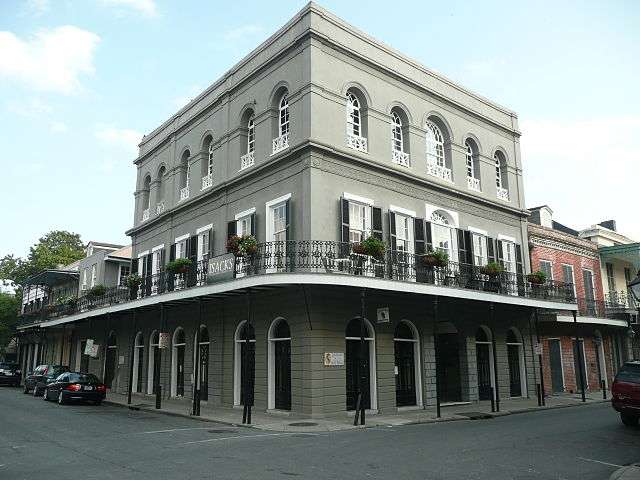
Image: Wikimedia Commons
On Royal Street in New Orleans’ French Quarter, the Lalaurie Mansion rises like a dark jewel among the pastel façades, its wrought iron balconies curling like blackened lace and its carved doors hinting at secrets long buried. By day, it might be admired as a relic of refined 19th-century elegance. From the cupola atop its third floor, one could once gaze over the Vieux Carré and watch the Mississippi River curve gracefully before Jackson Square—a panorama of beauty that could lull the unwary into believing the mansion held nothing but charm. But appearances here are treacherous. Behind every polished surface, every gilded railing, lies a history drenched in blood and whispered horror.
Marie Delphine Macarty, the woman who would become Madame Lalaurie, moved through New Orleans society with the confidence of someone born to power. Three marriages and a family name steeped in influence cemented her place among the European Creole elite. Her household, like many of the era, relied on enslaved labor—but Madame Lalaurie’s cruelty transcended the accepted norms. Rumors circulated, hushed at social gatherings, dismissed as exaggeration… until the day the mansion revealed its true face.
That day came on April 10, 1834, when a fire broke out in the kitchen. Firefighters and neighbors arrived, expecting a typical blaze—but what they discovered would etch itself into the city’s darkest memory. Chained to the stove was the elderly cook, her trembling confession chilling every ear: she had tried to set the fire herself, desperate to escape punishment. Those “in need of punishment,” she whispered, were taken to the upper floors, never to return.
Curiosity and terror compelled the crowd to act. Denied the key to the forbidden rooms, they forced entry—and encountered the unimaginable. There, in the upper chambers, lay seven enslaved people, mutilated in every conceivable way, evidence of horrors so grotesque they defy description. The mansion, once a symbol of refinement, revealed itself as a crucible of suffering, and the woman who presided over it showed no remorse. When questioned, her husband’s callous words cut sharper than any blade: “Some people had better stay at home rather than come to others’ houses to dictate laws and meddle with other people’s business.”
The city erupted in outrage. A mob descended upon the mansion, smashing windows, tearing furniture apart, and leaving chaos in their wake. And yet, amid the destruction, Madame Lalaurie vanished. Some say she slipped away to the waterfront, boarding a schooner bound for Mobile, Alabama, before fading into the shadows of Paris. Others whisper that she never truly escaped, that her presence lingers, unseen but felt, in the echoing halls of her former home.
Even now, the mansion seems alive with memory. Locals claim to hear the faint cries of those who suffered there, carried on the humid breeze that drifts through the Quarter. Some swear they see figures moving behind the blackened iron gates, shadows that vanish when approached.